"If we place pornography and the tyranny of slenderness alongside one another we have the two most significant obsessions of our culture, and both of them focused upon a woman's body." -Kim Chernin
- Body image involves our perception, imagination, emotions, and physical sensations of and about our bodies. It s not static- but ever changing; sensitive to changes in mood, environment, and physical experience. It is not based on fact. It is psychological in nature, and much more influenced by self-esteem than by actual physical attractiveness as judged by others. It is not inborn, but learned. This learning occurs in the family and among peers, but these only reinforce what is learned and expected culturally.
In this culture, we women are starving ourselves, starving our children and loved ones, gorging ourselves, gorging our children and loved ones, alternating between starving and gorging, purging, obsessing, and all the while hating, pounding and wanting to remove that which makes us female: our bodies, our curves, our pear-shaped selves.
- "Cosmetic surgery is the fastest growing 'medical' speciality.... Throughout the 80s, as women gained power, unprecedented numbers of them sought out and submitted to the knife...." - Naomi Wolf
Our psychological boundaries develop early in life, based on how we are held and touched (or not held and touched). A person who is deprived of touch as an infant or young child, for example, may not have the sensory information s/he needs to distinguish between what is inside and what is outside her/himself. As a result, boundaries may be unclear or unformed. This could cause the person to have difficulty getting an accurate sense of his/her body shape and size. This person might also have difficulty eating, because they might have trouble sensing the physical boundaries of hunger and fullness or satiation. On the other extreme, a child who is sexually or physically abused may feel terrible pain and shame or loathing associated to his/her body. Such a person might use food or starvation to continue the physical punishments they grew familiar with in childhood.
Developing a Healthy Body Image
Here are some guidelines (Adapted from BodyLove: Learning to Like Our Looks and Ourselves, Rita Freeman, Ph.D.) that can help you work toward a positive body image:
1. Listen to your body. Eat when you are hungry.
2 .Be realistic about the size you are likely to be based on your genetic and environmental
history..
3. Exercise regularly in an enjoyable way, regardless of size.
4. Expect normal weekly and monthly changes in weight and shape
5. Work towards self acceptance and self forgiveness- be gentle with yourself.
6. Ask for support and encouragement from friends and family when life is stressful.
7. Decide how you wish to spend your energy -- pursuing the "perfect body image" or enjoying
family, friends, school and, most importantly, life.
Think of it as the three A's....
Attention -- Refers to listening for and responding to internal cues (i.e., hunger, satiety,
fatigue).
Appreciation -- Refers to appreciating the pleasures your body can provide.
Acceptance -- Refers to accepting what is -- instead of longing for what is not.
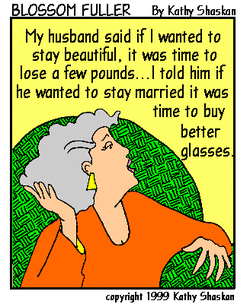
"Click here for more Blossom Fuller"
Healthy body weight is the size a person naturally returns to after a long period of both non-compulsive eating* and consistent exercise commensurate with the person' s physical health and condition. We must learn to advocate for ourselves and our children to aspire to a naturally determined size, even though that will often mean confronting misinformed family, friends, and media advertising again and again.
- *Simply stated, non-compulsive eating means eating when you are hungry and stopping when you are satisfied. This involves being able to distinguish emotional hunger from physical hunger, and satiation from over fullness. Link to: Compulsive Overeating for more information. Link to: Bibliography to view sources.
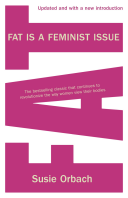
Recommended Books
Susie Orbach
Random House, 3/08/2010 - Self-Help - 400 pages
THE ORIGINAL ANTI-DIET BOOK IS BACK - In one volume together with its best selling sequel
Fat Is a Feminist Issue : A Self Help Guide for Compulsive Eaters, by Susie Orbach
This is the newest edition of the two most famous books from the Women's Therapy Centre, the one that got us all started back in the early 80's. At that time, this kind of thinking was revolutionary. The book inspired such well known authors as Geneen Roth, Mary Pipher, Jane Hirschmann and many others. The very notion that dieting doesn't work and that society's expectations of women's bodies was what needed to be challenged was first introduced here. Susie gets right to the heart of eating problems with techniques to tune into physical hunger rather than dieting and trying to ignore it. It is as timely now as it ever was, after 30 years of being put to the test by women and therapists all over the world.
Also Highly recommended:
Feast or Famine: A New Zealand Guide to Understanding Eating Disorders. Karen McMillan. Random House (2006)
Hunger Strike : The Anorectic's Struggle As a Metaphor for Our Age by Susie Orbach, Norton Books, 2005.
The Obesity Myth: Why our obsession with weight is hazardous to our health. Paul Campos. Penguin (2004)
200 Ways to Love the Body You Have by Marcia Germaine Hutchinson , 1999
The Obsession : Reflections on the Tyranny of Slenderness by Kim Chernin (1994)
You could just read this for its inspiration and poetry if it weren't also so wise and true.
The Beauty Myth by Naomi Wolf, Doubleday, 1991.
BodyLove: Learning to Like Our Looks and Ourselves, Rita Freeman, Ph.D., Harper & Row, 1988.
Transforming Body Image: Learning to Love the Body You Have by Marcia Germaine Hutchinson, EdD , The Crossing Press, 1985.
Susie Orbach
Random House, 3/08/2010 - Self-Help - 400 pages
THE ORIGINAL ANTI-DIET BOOK IS BACK - In one volume together with its best selling sequel
Fat Is a Feminist Issue : A Self Help Guide for Compulsive Eaters, by Susie Orbach
This is the newest edition of the two most famous books from the Women's Therapy Centre, the one that got us all started back in the early 80's. At that time, this kind of thinking was revolutionary. The book inspired such well known authors as Geneen Roth, Mary Pipher, Jane Hirschmann and many others. The very notion that dieting doesn't work and that society's expectations of women's bodies was what needed to be challenged was first introduced here. Susie gets right to the heart of eating problems with techniques to tune into physical hunger rather than dieting and trying to ignore it. It is as timely now as it ever was, after 30 years of being put to the test by women and therapists all over the world.
Also Highly recommended:
Feast or Famine: A New Zealand Guide to Understanding Eating Disorders. Karen McMillan. Random House (2006)
Hunger Strike : The Anorectic's Struggle As a Metaphor for Our Age by Susie Orbach, Norton Books, 2005.
The Obesity Myth: Why our obsession with weight is hazardous to our health. Paul Campos. Penguin (2004)
200 Ways to Love the Body You Have by Marcia Germaine Hutchinson , 1999
The Obsession : Reflections on the Tyranny of Slenderness by Kim Chernin (1994)
You could just read this for its inspiration and poetry if it weren't also so wise and true.
The Beauty Myth by Naomi Wolf, Doubleday, 1991.
BodyLove: Learning to Like Our Looks and Ourselves, Rita Freeman, Ph.D., Harper & Row, 1988.
Transforming Body Image: Learning to Love the Body You Have by Marcia Germaine Hutchinson, EdD , The Crossing Press, 1985.