When searching for counselling and therapy to heal the wounds of trauma, childhood abuse, and/or childhood neglect one can be faced with an overwhelming myriad of choices. Most treatment techniques (both medical and psychological) that are studied scientifically take into account that a significant percentage (actual numbers vary based on condition or treatment being studied) of those being studied get better spontaneously simply because they believe they are being given a (called the placebo effect).
A number of new approaches that take into account the recent discoveries of neuroscience, made possible by modern brain imaging techniques, have been shown either scientifically (in placebo controlled randomised blind or double-blind studies) or anecdotally (based on empirical observations and patient/client reports) to be highly effective in a shorter period of time than conventional "talking only" therapy. All of these approaches, of course, need to be integrated by a skilled and experienced clinician, into an overall treatment style and plan that will include talking therapy as well as a healthy respect for the power of the therapeutic relationship and the need for the therapist to earn the client's trust by creating safety.
Below I list some of the approaches that have been shown to be effective with survivors of adult trauma and childhood physical, sexual, and emotional or psychological abuse, plus a link to another blog entry I wrote on effective approaches for those suffering from the effects of "poor affect regulation", commonly caused by emotional neglect or the unavailability of reliable soothing in early childhood. I only list those methods that I have personally learned and tried and observed to be effective, and the reasons (if known) that they work.
Affect regulation treatment approaches are also useful with survivors of trauma and/or childhood abuse. The basis for this is described in a separate blog entry (Learning to Comfort and Soothe) as they are more generic therapy approaches used for a broader range of problems and causes. Since writing that entry, I have been learning about "memory reconsolidation" which claims that rather than going through the painstaking process of learning to "regulate" out of control feelings, one can "re-write" the implicit memory itself so that feelings become self-regulating, as they would have been if the original "dysfunctional implicit memory" hadn't been laid down in the first place. I will explore this in depth in another blog entry (coming as soon as I finish writing it).
I mention anecdotal or scientific (placebo-controlled) in brackets next to the name of each approach to identify the type of documentation of effectiveness. I include approaches that have primarily anecdotal evidence because it is extremely difficult to measure approaches to complex trauma and dissociation in a laboratory setting. In my opinion, there are too many uncontrollable variables once you try to measure treatment effects with this population, especially since it isn't ethical to in any way limit access to anything that might help simply because it could confound the scientific evidence of your study. The DNMS, Sensorimotor Psychotherapy, and Ego State Work, for example, have ample anecdotal evidence presented in scientific journals as controlled case studies, and are based upon modern scientific insights into the brain, but that is not the same as evidence based on rigorously controlled scientific studies.
A number of new approaches that take into account the recent discoveries of neuroscience, made possible by modern brain imaging techniques, have been shown either scientifically (in placebo controlled randomised blind or double-blind studies) or anecdotally (based on empirical observations and patient/client reports) to be highly effective in a shorter period of time than conventional "talking only" therapy. All of these approaches, of course, need to be integrated by a skilled and experienced clinician, into an overall treatment style and plan that will include talking therapy as well as a healthy respect for the power of the therapeutic relationship and the need for the therapist to earn the client's trust by creating safety.
Below I list some of the approaches that have been shown to be effective with survivors of adult trauma and childhood physical, sexual, and emotional or psychological abuse, plus a link to another blog entry I wrote on effective approaches for those suffering from the effects of "poor affect regulation", commonly caused by emotional neglect or the unavailability of reliable soothing in early childhood. I only list those methods that I have personally learned and tried and observed to be effective, and the reasons (if known) that they work.
Affect regulation treatment approaches are also useful with survivors of trauma and/or childhood abuse. The basis for this is described in a separate blog entry (Learning to Comfort and Soothe) as they are more generic therapy approaches used for a broader range of problems and causes. Since writing that entry, I have been learning about "memory reconsolidation" which claims that rather than going through the painstaking process of learning to "regulate" out of control feelings, one can "re-write" the implicit memory itself so that feelings become self-regulating, as they would have been if the original "dysfunctional implicit memory" hadn't been laid down in the first place. I will explore this in depth in another blog entry (coming as soon as I finish writing it).
I mention anecdotal or scientific (placebo-controlled) in brackets next to the name of each approach to identify the type of documentation of effectiveness. I include approaches that have primarily anecdotal evidence because it is extremely difficult to measure approaches to complex trauma and dissociation in a laboratory setting. In my opinion, there are too many uncontrollable variables once you try to measure treatment effects with this population, especially since it isn't ethical to in any way limit access to anything that might help simply because it could confound the scientific evidence of your study. The DNMS, Sensorimotor Psychotherapy, and Ego State Work, for example, have ample anecdotal evidence presented in scientific journals as controlled case studies, and are based upon modern scientific insights into the brain, but that is not the same as evidence based on rigorously controlled scientific studies.
Ego State Therapy (anecdotal)
Founders: John and Helen Watkins
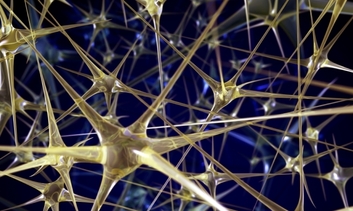
The concept of segmentation of personality into discreet parts of self has been around for many years, but has only recently been validated scientifically by new brain scanning technologies. These technologies, by measuring blood flow patterns in the brain, demonstrate how ego states are formed by neural clusters repeatedly firing together (and therefore "wiring together"). Such neural nets form the basis for most implicit learning - such as learning how to ride a bicycle - a skill that improves and eventually "clicks" as the neurons, which fire together in the same pattern whenever riding is practised, form a network with a particular skill set. When such a neural net forms in the context of a relationship, it will develop a unique point of view and way of behaving.
Ego states exist as a collection of perceptions, cognitions and emotions in organised clusters. An ego state may be defined as an organized system of behaviour and experience, whose elements are bound together by a common principle. Ego states may also vary in volume. A larger ego state may include all the various behaviours activated in one's occupation, whereas a smaller ego state might be formed around a simple action, such as using a mobile phone. They may encompass current modes of behaviour and experiences or include many memories, postures, feelings, etc., that were learned at an earlier age.
Founders: John and Helen Watkins
The concept of segmentation of personality into discreet parts of self has been around for many years, but has only recently been validated scientifically by new brain scanning technologies. These technologies, by measuring blood flow patterns in the brain, demonstrate how ego states are formed by neural clusters repeatedly firing together (and therefore "wiring together"). Such neural nets form the basis for most implicit learning - such as learning how to ride a bicycle - a skill that improves and eventually "clicks" as the neurons, which fire together in the same pattern whenever riding is practised, form a network with a particular skill set. When such a neural net forms in the context of a relationship, it will develop a unique point of view and way of behaving.
Ego states exist as a collection of perceptions, cognitions and emotions in organised clusters. An ego state may be defined as an organized system of behaviour and experience, whose elements are bound together by a common principle. Ego states may also vary in volume. A larger ego state may include all the various behaviours activated in one's occupation, whereas a smaller ego state might be formed around a simple action, such as using a mobile phone. They may encompass current modes of behaviour and experiences or include many memories, postures, feelings, etc., that were learned at an earlier age.
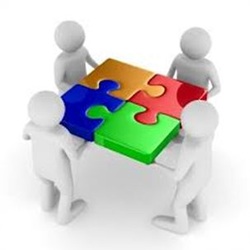
The human mind is a collective "family of self" within a single individual. How well these "family" members get along, and how effectively they cooperate can vary considerably from individual to individual.
This segmentation has been called many names over the years, depending upon which psychological theory is being used. In Freudian language we are all divided into Ego, Id and Superego; Jungians refer to "complexes" which are described almost identically to ego states; Transactional Analysts talk about the internal Parent, Adult and Child; and Psychosynthesis refers to "sub-personalities.
This segmentation has been called many names over the years, depending upon which psychological theory is being used. In Freudian language we are all divided into Ego, Id and Superego; Jungians refer to "complexes" which are described almost identically to ego states; Transactional Analysts talk about the internal Parent, Adult and Child; and Psychosynthesis refers to "sub-personalities.
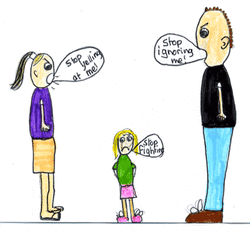
" Ego states exist on a continuum of separateness, with the most extreme dividedness being caused by the most extreme early relational trauma.
Although everyone has ego states, those states formed in response to loving supportive experiences do not tend to require psychotherapeutic intervention. When ego states are more split off and engage in internal battles, Ego State Therapy can be employed to help resolve some of these conflicts, often using techniques found in conflict resolution, group or family therapy, to enable a kind of internal diplomacy. This approach has demonstrated that complex psychodynamic problems can often be resolved in a much shorter period than with analytic therapies.
PLEASE NOTE: The techniques described here have been integrated into PSI (PsychoSomatic Integration), an overall approach I teach for working with trauma and abuse survivors. PSITM is described here in more detail.
More approaches to come....to be continued
Although everyone has ego states, those states formed in response to loving supportive experiences do not tend to require psychotherapeutic intervention. When ego states are more split off and engage in internal battles, Ego State Therapy can be employed to help resolve some of these conflicts, often using techniques found in conflict resolution, group or family therapy, to enable a kind of internal diplomacy. This approach has demonstrated that complex psychodynamic problems can often be resolved in a much shorter period than with analytic therapies.
PLEASE NOTE: The techniques described here have been integrated into PSI (PsychoSomatic Integration), an overall approach I teach for working with trauma and abuse survivors. PSITM is described here in more detail.
More approaches to come....to be continued